What Is Backflow and Why Does It Matter?
Backflow is the unintended reversal of water flow in a plumbing system. Under normal conditions, water flows in one direction, from the municipal supply into your property. But when pressure changes occur in the system, contaminated water can be pulled backward into the clean drinking supply. This is called backflow, and it is a serious public health concern.
There are two primary causes. Back-siphonage happens when a sudden drop in supply pressure, such as during a water main break or heavy fire hydrant use, creates a vacuum that pulls water backward through the system. Back-pressure occurs when downstream pressure exceeds the supply pressure, forcing non-potable water back into the clean line. This is common in buildings with boilers, elevated storage tanks, or irrigation systems connected to the potable supply.
Without a functioning backflow prevention device, fertilizers, pesticides, chemicals, and even sewage can enter the drinking water supply. This is why municipalities across Palm Beach County require tested, certified backflow prevention on most commercial properties and many residential connections.
Who Needs Backflow Testing in West Palm Beach?
If you own a commercial property, the answer is almost certainly yes. The Palm Beach County Water Utilities Department requires annual testing of all backflow prevention assemblies on commercial accounts. This includes restaurants, medical facilities, warehouses, car washes, and any property with an irrigation system tied to the potable water supply.
Residential properties are also required to have tested backflow prevention when certain conditions exist:
- Irrigation systems connected to the municipal water supply
- Swimming pools with automatic fill lines
- Solar heating systems tied to plumbing
- Properties with auxiliary water sources such as private wells cross-connected with the city supply
If you are unsure whether your property requires testing, our backflow testing team can evaluate your system and let you know exactly what is needed.
Types of Backflow Prevention Devices
Not all backflow preventers are the same. The type installed on your property depends on the level of risk and the codes that apply to your situation.
Reduced Pressure Zone Assembly (RPZ)
The RPZ is the most protective type of backflow preventer. It contains two independent check valves and a relief valve that opens to discharge water if either check fails. RPZ assemblies are required for high-hazard connections where contamination could pose a health risk, such as chemical processing facilities or medical buildings. These devices must be tested annually and rebuilt when internal components wear out.
Double Check Valve Assembly (DCVA)
A DCVA uses two check valves in series to prevent backflow. It is typically used for low to moderate hazard situations such as fire sprinkler connections and commercial irrigation systems. While less complex than an RPZ, it still requires annual testing to verify both checks are sealing properly.
Pressure Vacuum Breaker (PVB)
The PVB is one of the most common devices found on residential irrigation systems in South Florida. It protects against back-siphonage by opening an air inlet when supply pressure drops. PVBs must be installed above the highest outlet in the system and require annual testing.
What Happens During a Backflow Test?
A certified backflow test is not something a general handyman or irrigation company should perform. In Palm Beach County, the test must be conducted by a tester who holds a current certification and uses a calibrated differential pressure gauge.
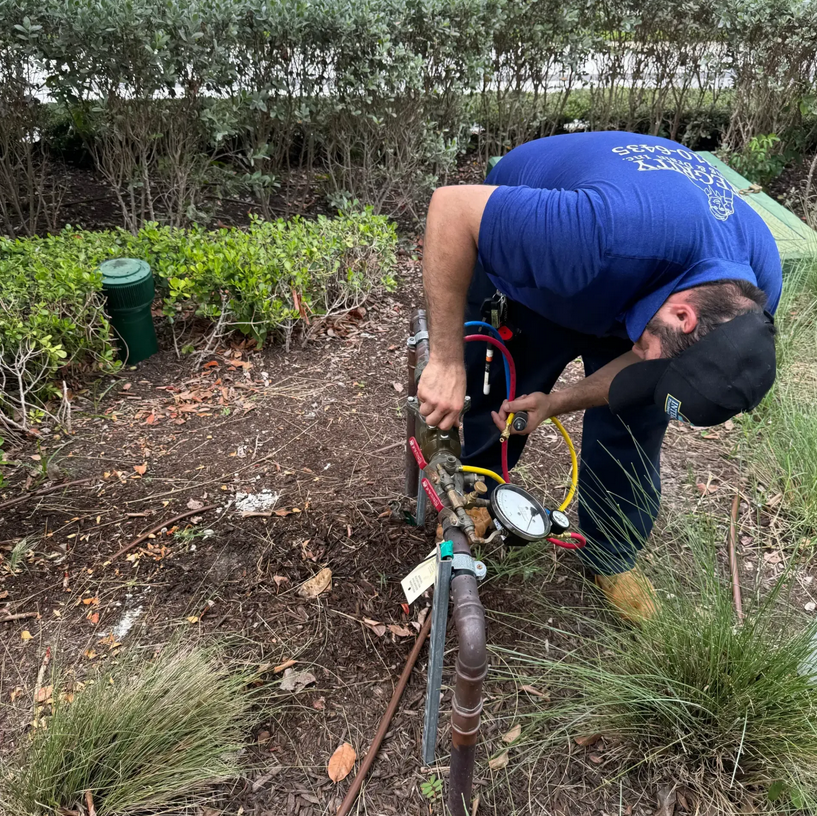
Here is what the process looks like when our team performs a test:
1. Visual Inspection. We start by examining the device for physical damage, leaks, corrosion, and proper installation. We verify the device is accessible and that shutoff valves are functional.
2. Gauge Testing. Using a calibrated test kit, we attach hoses to the test ports on the assembly and measure the pressure differential across each check valve and the relief valve. Each component must hold within specific pressure thresholds to pass.
3. Pass or Fail Determination. If all components meet the required specifications, the device passes. If any check valve leaks or the relief valve fails to open at the correct pressure, the device fails and requires repair.
4. Repair and Retest. When a device fails, we can rebuild or replace the internal components on site using manufacturer-approved repair kits. After the repair, we retest the device to confirm it now meets code. Learn more about the full process on our backflow testing service page.
5. Certification and Reporting. After a successful test, we complete the required test report form and submit it directly to the local water utility on your behalf. We also tag the device with the test date and our certification number.
Warning Signs Your Backflow Preventer May Be Failing
While many backflow issues are only detectable through a professional test, there are some signs that suggest your device needs attention:
- Water constantly dripping or flowing from the relief valve port. This usually means a check valve has failed and the relief valve is doing its job by discharging the backflow
- Discolored or foul-tasting water from your taps, which could indicate contaminated water has entered the supply line
- A sudden drop in water pressure in your building, especially after irrigation or fire system activity
- Visible corrosion, rust, or physical damage on the device body or shutoff valves
- A notification letter from the water utility stating your test is past due or your device has been flagged
If you notice any of these signs, do not wait for your scheduled annual test. Contact a certified tester to inspect the device as soon as possible.
What Happens If You Skip Backflow Testing?
Skipping your annual backflow test is not just a risk to water safety. It can result in real financial and legal consequences. In Palm Beach County, properties that fail to submit a passing test report by the deadline may face:
- Service disconnection. The water utility has the authority to shut off water service to non-compliant properties
- Fines and penalties. Repeated non-compliance can result in escalating fines
- Liability exposure. If a backflow event contaminates the public water supply and your device was not tested, you could be held responsible for damages
The annual test is a small investment that protects your property, your tenants, and your community.
Why West Palm Beach Properties Face Higher Backflow Risk
South Florida’s environment creates conditions that increase the likelihood of backflow events. The flat terrain, high water tables, and frequent heavy rain put additional stress on municipal water infrastructure. Pressure fluctuations are more common here than in areas with elevated reservoirs and gravity-fed systems.
Additionally, the widespread use of irrigation systems throughout West Palm Beach and surrounding communities like Palm Beach Gardens and Wellington means more properties have cross-connections that require protection. Commercial properties with cooling towers, boilers, and process water systems add even more potential backflow entry points.
How to Stay Compliant
Staying on top of your backflow testing requirement is straightforward when you have a reliable plumbing partner. Here is what we recommend:
- Schedule your annual test early. Do not wait for the utility deadline. Testing early gives you time to make repairs if the device fails.
- Keep records. Maintain copies of your test reports in case the utility requests proof of compliance.
- Replace aging devices proactively. If your backflow preventer is more than 10 to 15 years old, consider having it evaluated for replacement before it fails during testing.
- Work with a certified tester. Not all plumbers carry the specific backflow certification required by Palm Beach County. Always verify your tester is certified and uses calibrated equipment.
Final Thoughts
Backflow testing is one of those services that most property owners do not think about until they receive a compliance notice in the mail. But the consequences of ignoring it, from water contamination to service shutoffs, are serious and avoidable.
At Integrity Plumbing and Drain, we are certified to test, repair, and replace all types of backflow prevention assemblies throughout West Palm Beach and Palm Beach County. We handle the entire process from inspection to paperwork submission, so you stay compliant without the hassle. Visit our backflow testing page to learn about our process, or call us at 561-310-6435 to schedule your annual test today.
Need plumbing help in West Palm Beach?
Integrity Plumbing & Drain provides same-day service and free estimates.