The Letter No Homeowner Wants
It usually starts with an envelope, not a leak. A renewal notice with a premium that jumped, a request for a four point inspection, or worst of all, a letter saying your policy will not be renewed because of the plumbing. Thousands of Palm Beach County homeowners have opened some version of that letter, and most of them had no idea anything was wrong. Their water ran fine. Their drains drained. But somewhere behind the walls or under the slab sat one of the two pipes that Florida insurance companies have learned to fear.
If your home was built before 1995, this post is worth ten minutes of your time, because there is a real chance one of those pipes is in your house right now.
Why Insurance Companies Care About Your Pipes
Water damage is one of the most common and expensive claims in Florida homeownership. A burst supply line can dump hundreds of gallons into a home in an hour, and a failed drain under the slab can quietly destroy flooring and feed mold for months. Insurers know this, so on older homes they look hard at the plumbing before they agree to cover it.
That is what the four point inspection is about. When a Florida home reaches roughly 30 years old, most carriers want a licensed inspector to report on four systems before they will write or renew a policy: roof, electrical, HVAC, and plumbing. On the plumbing page, two materials set off alarms faster than anything else: polybutylene supply lines and aging cast iron drains. Depending on the carrier, finding one can mean a higher premium, a water damage exclusion, a demand that you replace the pipe, or a flat declination.
The frustrating part is that many homeowners find out during a sale or a policy shop, at the worst possible moment. The better path is knowing what you have before anyone makes you look.
Suspect Number One: Polybutylene, the Gray Pipe
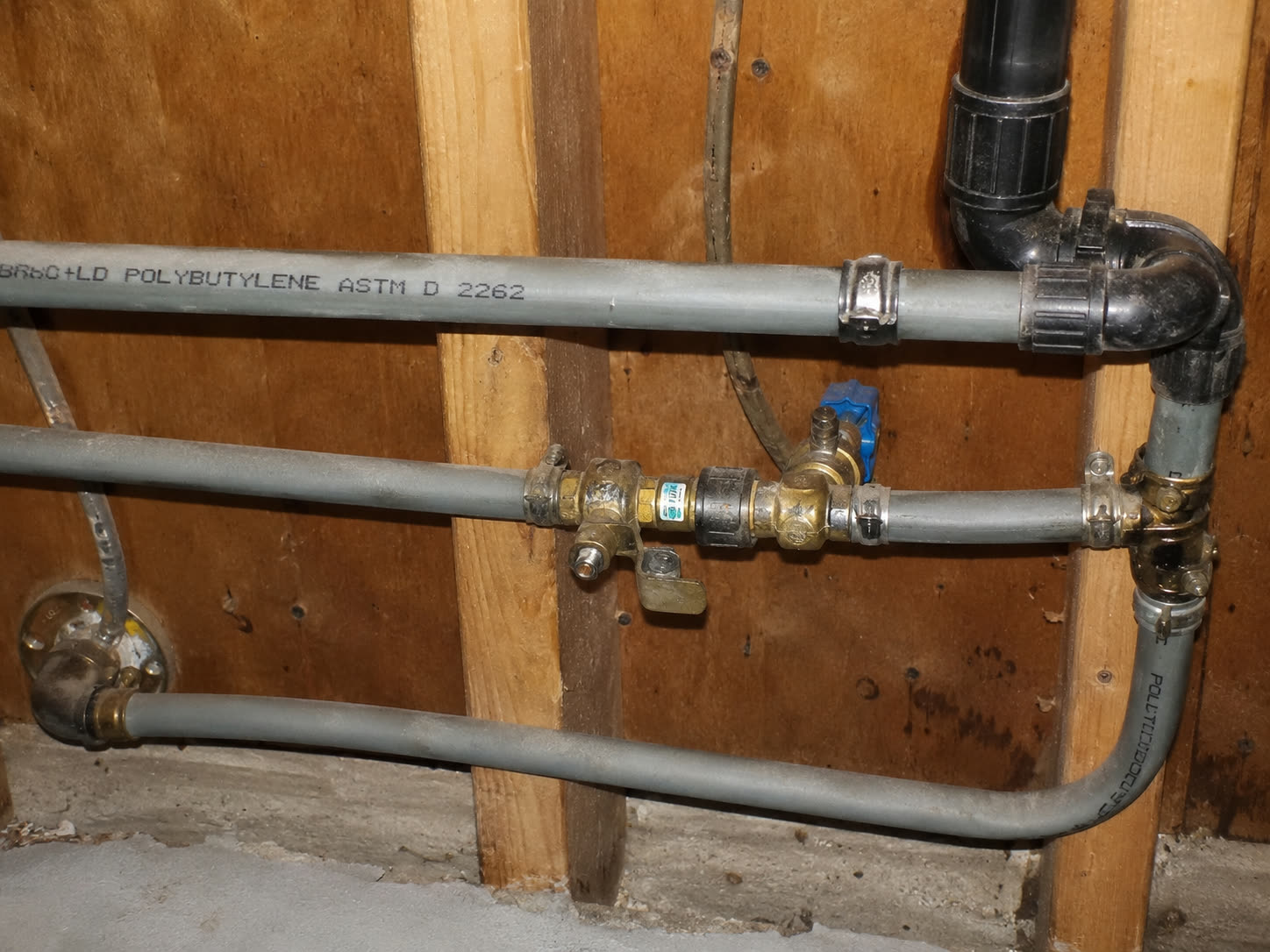
Polybutylene, usually called Poly B, is a gray plastic supply pipe that was installed in millions of American homes between about 1978 and 1995. It was cheap, flexible, and easy to work with, and builders across South Florida used it by the mile. Then the failures started.
The problem is chemistry. Chlorine and other disinfectants in city water attack polybutylene from the inside, making it brittle over time. The pipe can look perfectly fine from the outside while the inner wall is flaking and cracking, and then one day it lets go. Not a slow drip you catch early, a sudden failure that floods the house while you are at work or out of town. The failures became so widespread that the material was the subject of one of the largest class action settlements of its era and disappeared from the market in the mid 90s.
That history is exactly why underwriters treat it the way they do. Poly B does not give warnings, so its track record is the only signal they need.
How to spot it: look where supply pipes are visible, under sinks, at the water heater connections, in the garage, or coming through walls. Poly B is usually gray (sometimes blue outdoors), flexible, about the size of a broom handle or smaller, joined with metal crimp rings or plastic fittings, and often stamped with the code PB2110. If you see that stamp, you have your answer.
Suspect Number Two: Cast Iron Drains, the Old Heavyweight
If your home was built before about 1975, its original drain lines are probably cast iron, and cast iron drains were built for a 50 to 75 year service life. Do the math on a 1965 home and you see the issue: West Palm Beach neighborhoods full of mid century houses are running on drains that are at or past the end of the line.
Cast iron does not fail suddenly the way Poly B does. It rusts from the inside out, and the bottom of the pipe goes first, a failure plumbers call channeling. As the walls roughen and scale, they grab grease and paper, so the first symptoms are the ones we get called about every week: drains that run slow no matter how often they are cleared, repeated backups, gurgling, and sewer odors you cannot find the source of. In our humid, salty, high water table corner of Florida, the process runs faster than the textbooks say. Left alone, a rotted drain line under the slab can leak sewage into the soil, invite roots, and eventually take the surrounding floor with it.
Insurers flag old cast iron for the same reason they flag Poly B: they have paid too many claims on it.
How to spot it: find a cleanout outside or a drain connection in the garage or under a sink. Cast iron is heavy, dark gray or black, and rings like metal when tapped. Rust stains, flaking, or damp soil near the line are bad signs. The real assessment, though, happens with a camera inspection, which shows the actual condition of the pipe from the inside instead of guessing from age.
The Five Minute Check
Here is the short version you can do this week:
- Find your build year. Before 1975 puts you in cast iron territory. 1978 to 1995 is the Poly B era. After 1995 and you are likely dealing with copper, CPVC, or PEX, all fine in the eyes of your insurer.
- Look under two sinks and at the water heater. You are looking for gray flexible plastic with crimp rings, or the PB2110 stamp.
- Check a cleanout. Heavy dark metal pipe means cast iron drains.
- Listen to your symptoms. Repeated backups, chronic slow drains, or sewer smells in an older home are worth a camera look regardless of what the pipes are made of.
If you find something, do not panic. Finding Poly B or cast iron does not always mean an emergency repipe today. It means you should get a professional set of eyes on it so you know its real condition, what your insurer is likely to say, and what your timeline realistically looks like. Sometimes the honest answer is that you have a few years to plan. We covered the warning signs that mean you do not in our guides to hidden leaks and low water pressure, because failing pipes usually announce themselves there first.
What a Repipe Actually Involves
The word repipe scares people, and it should not. A modern whole house repipe replaces the problem supply lines with PEX or copper, and for most single family homes the water is only off for a matter of hours during the changeover. The crew opens small access points in drywall, runs the new lines, pressure tests everything, and the wall openings are patched afterward. Permits and inspections are part of the job, and you should never hire anyone who suggests skipping them, because the permit record is exactly what your insurance company wants to see.
For cast iron drains, the fix depends on what the camera finds. Sections can be replaced, some lines are candidates for descaling or lining, and the worst cases call for replacement under the slab. That is a bigger conversation, and it starts with knowing instead of wondering. Our leak detection and camera equipment mean we can tell you exactly what shape your system is in without tearing anything open.
The payoff goes beyond the plumbing. A documented repipe with permits turns that four point inspection from a liability into a selling point, keeps your coverage options open, and takes the 2 a.m. burst pipe scenario off the table entirely.
When to Call a Professional
Call a plumber when:
- You found the PB2110 stamp or gray crimped pipe anywhere in the house.
- Your home predates 1975 and the drains have never been inspected with a camera.
- An insurer or inspector flagged your plumbing and you want a second opinion on what it actually needs.
- You are buying or selling an older home and need to know what is behind the walls before the four point inspection decides for you.
We will identify exactly what pipe your home has, show you its condition honestly, and lay out your options with transparent pricing. If your pipes are fine, we will tell you that too, and you will have it in writing for whoever asks.
Final Thoughts
Polybutylene and old cast iron earned their reputations one flooded living room at a time, and insurance companies are just reading the statistics. But the statistics are about pipes nobody checked. The homeowners who come out fine are the ones who found out what they had on their own schedule, planned the fix, and never gave their insurer or a burst line the chance to surprise them.
At Integrity Plumbing and Drain, we help West Palm Beach homeowners get ahead of exactly this. If your home was built before 1995 and you have never looked at what is behind the walls, call us at 561-310-6435 and we will give you a straight answer about what you have, what it is worth doing now, and what can wait.